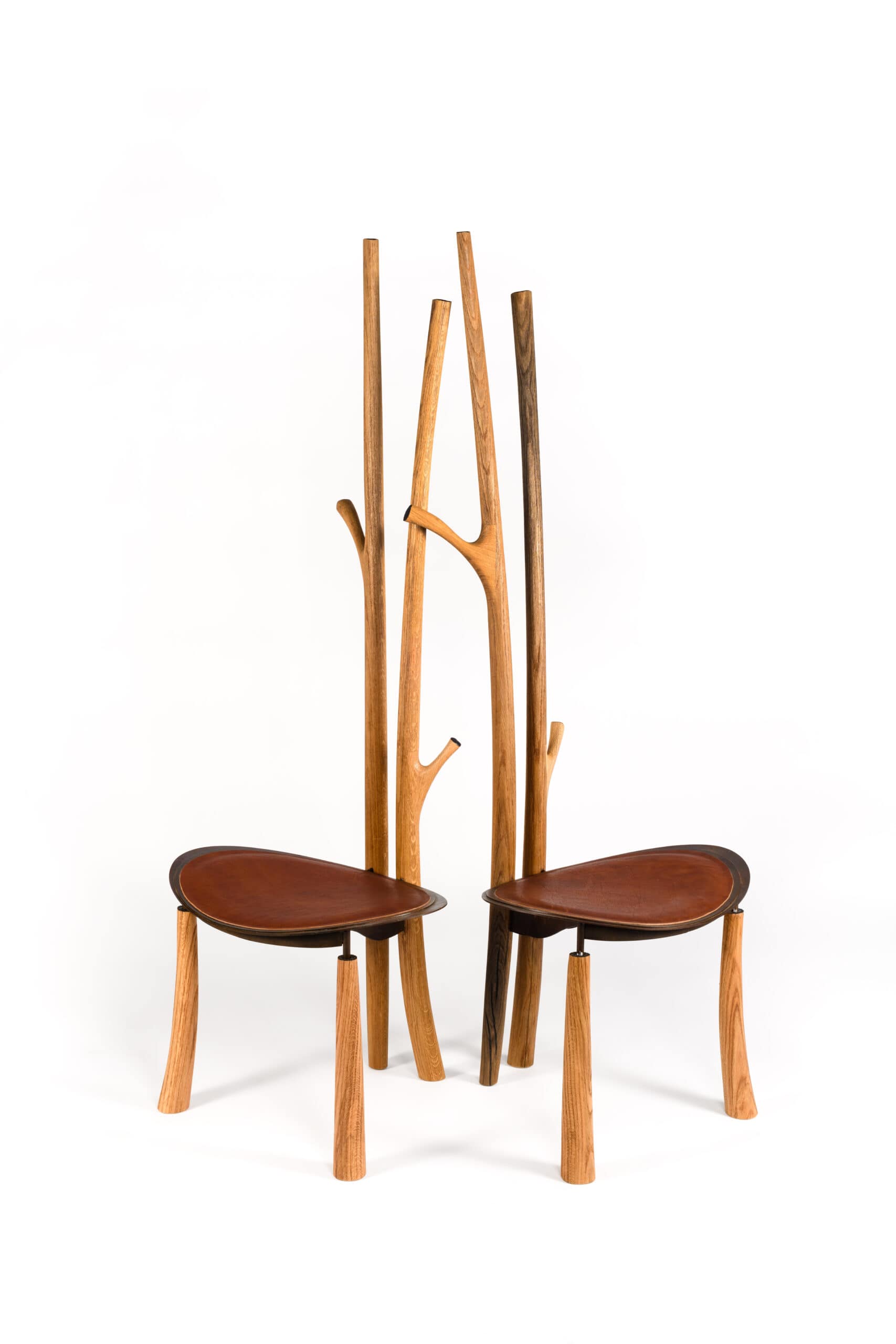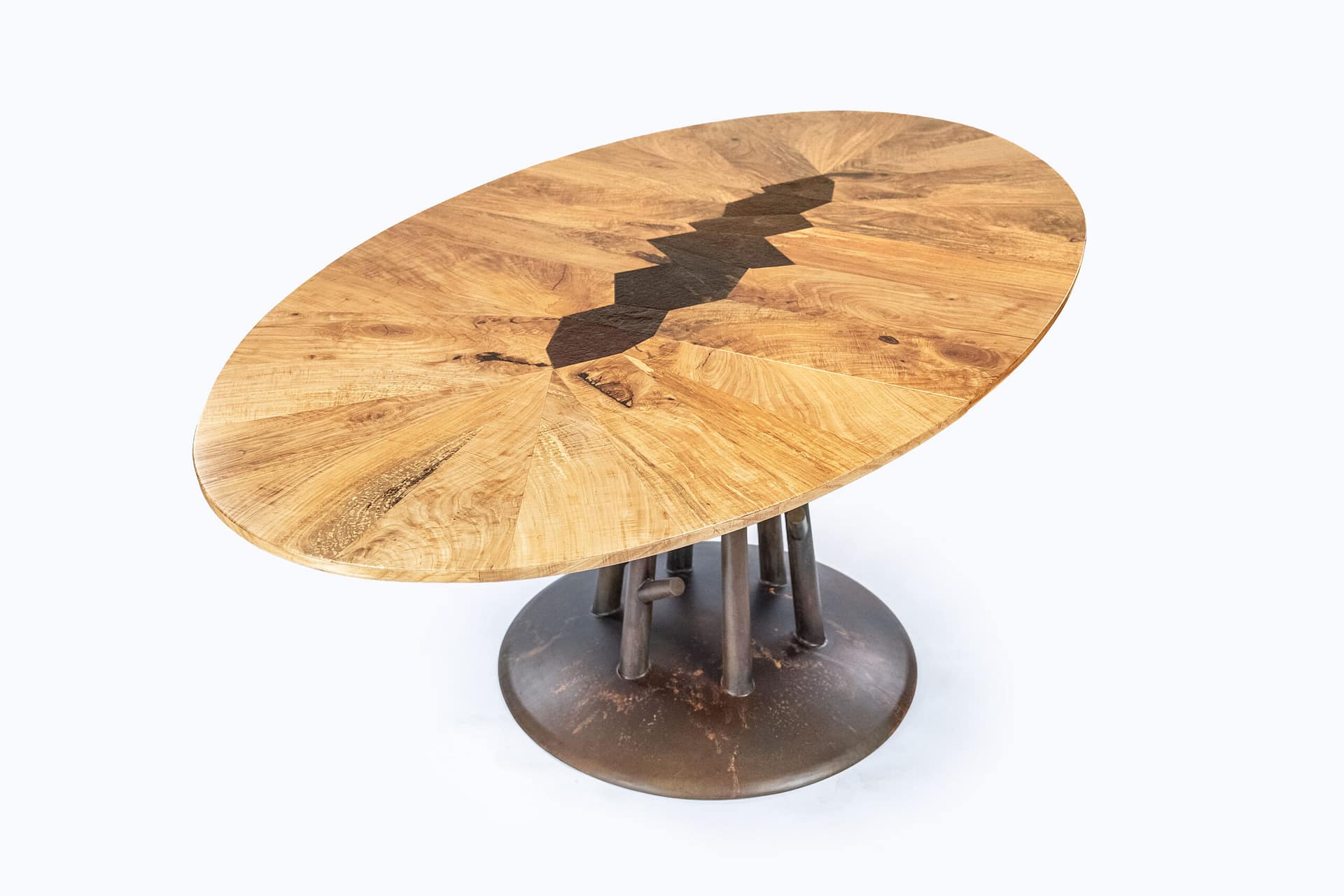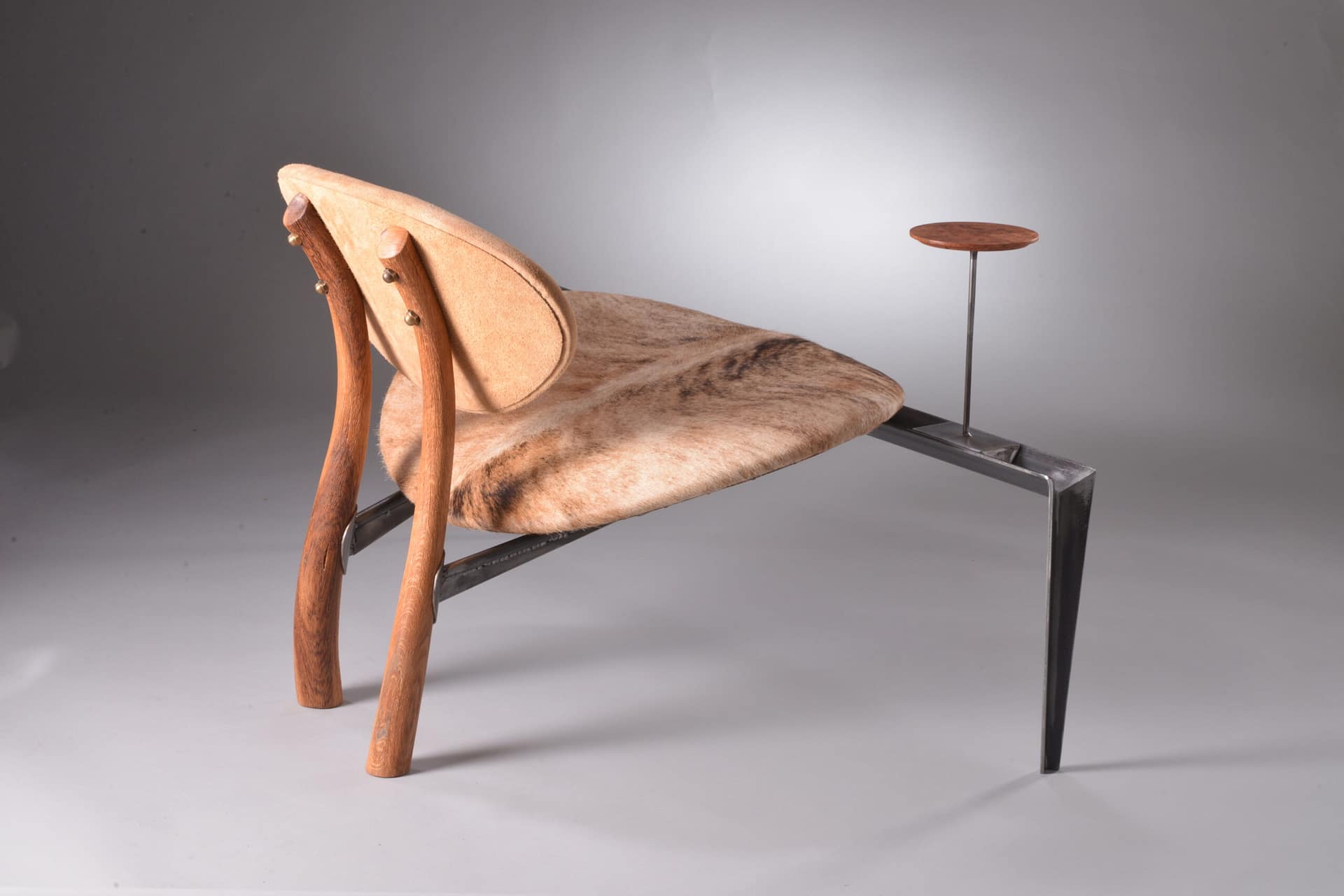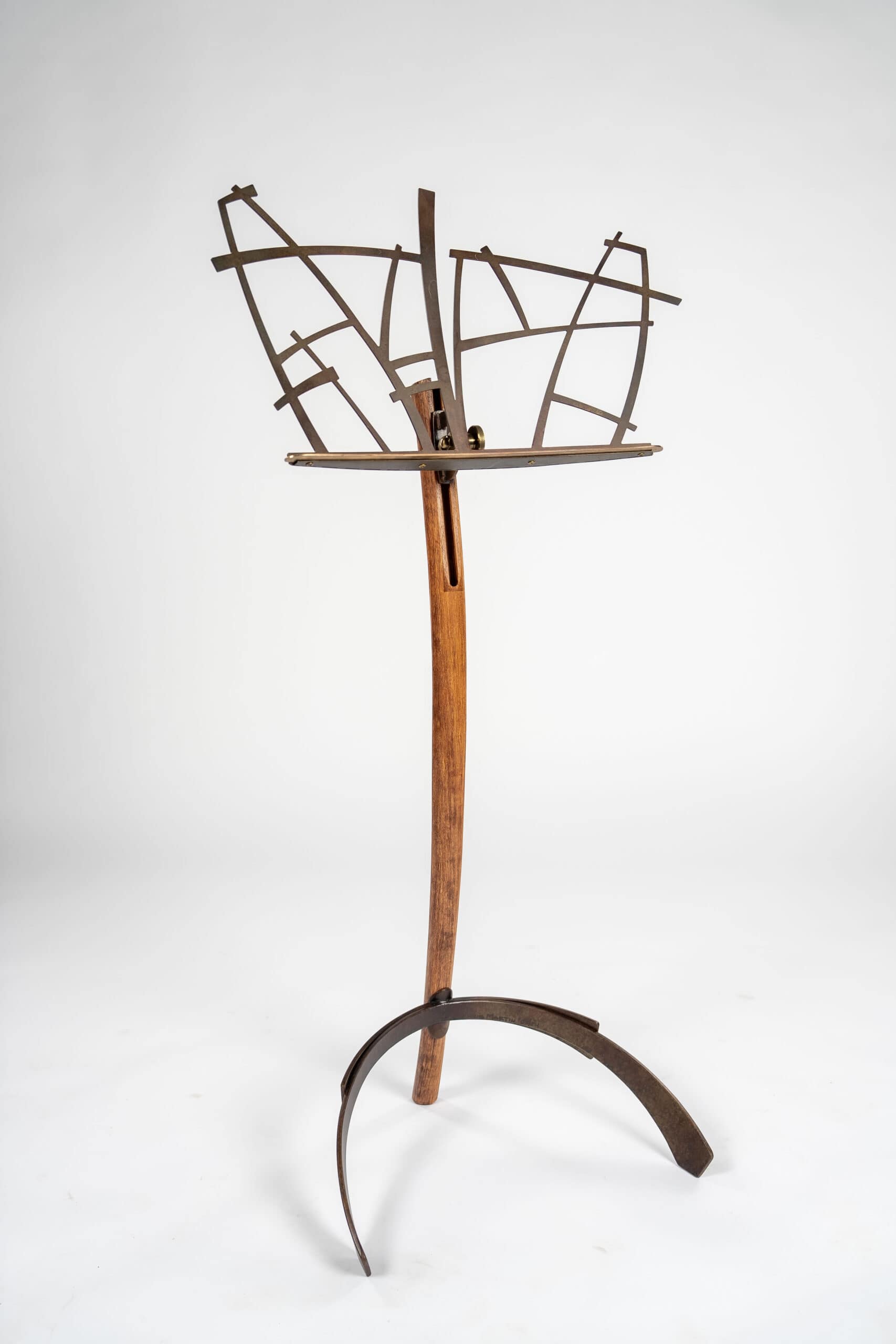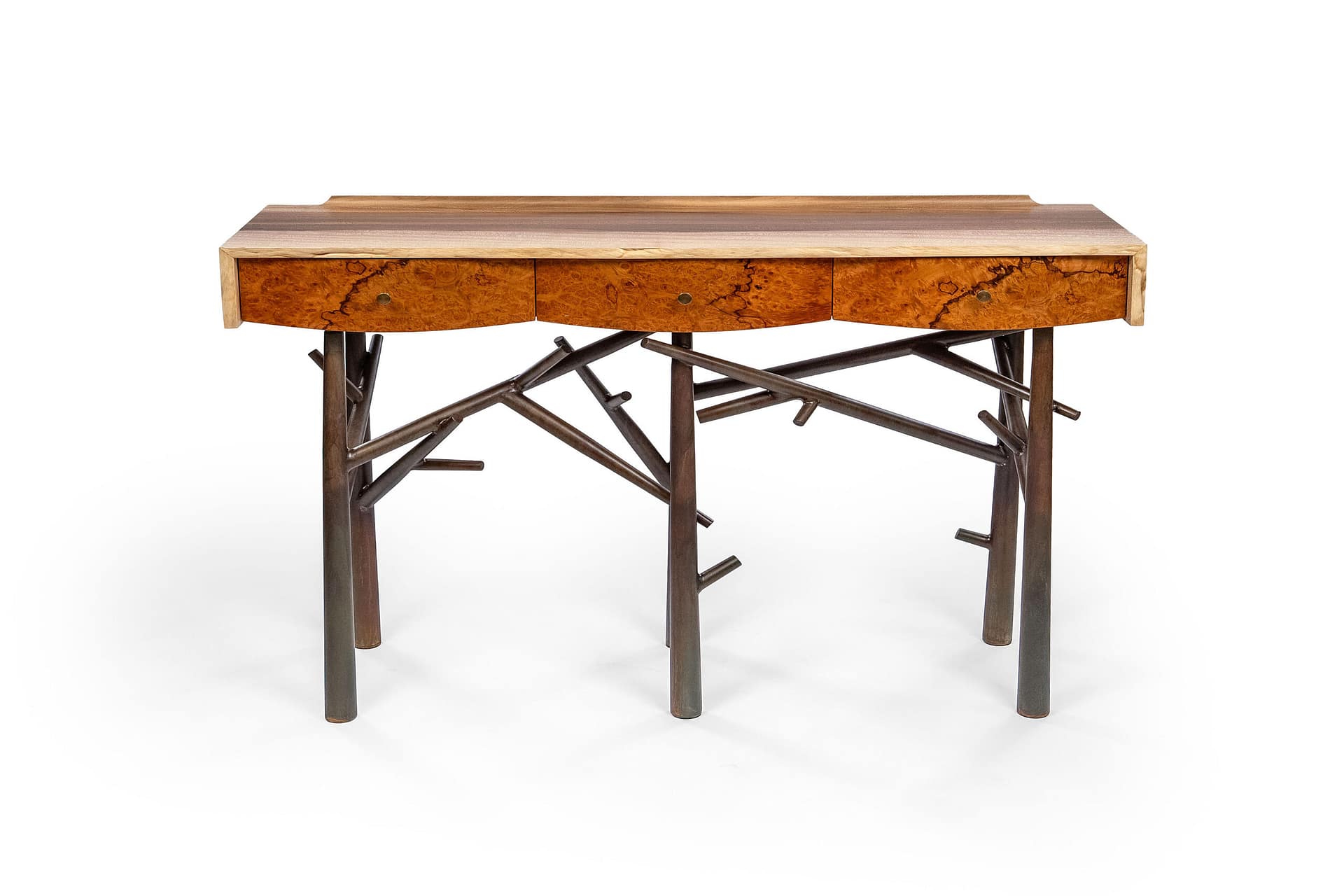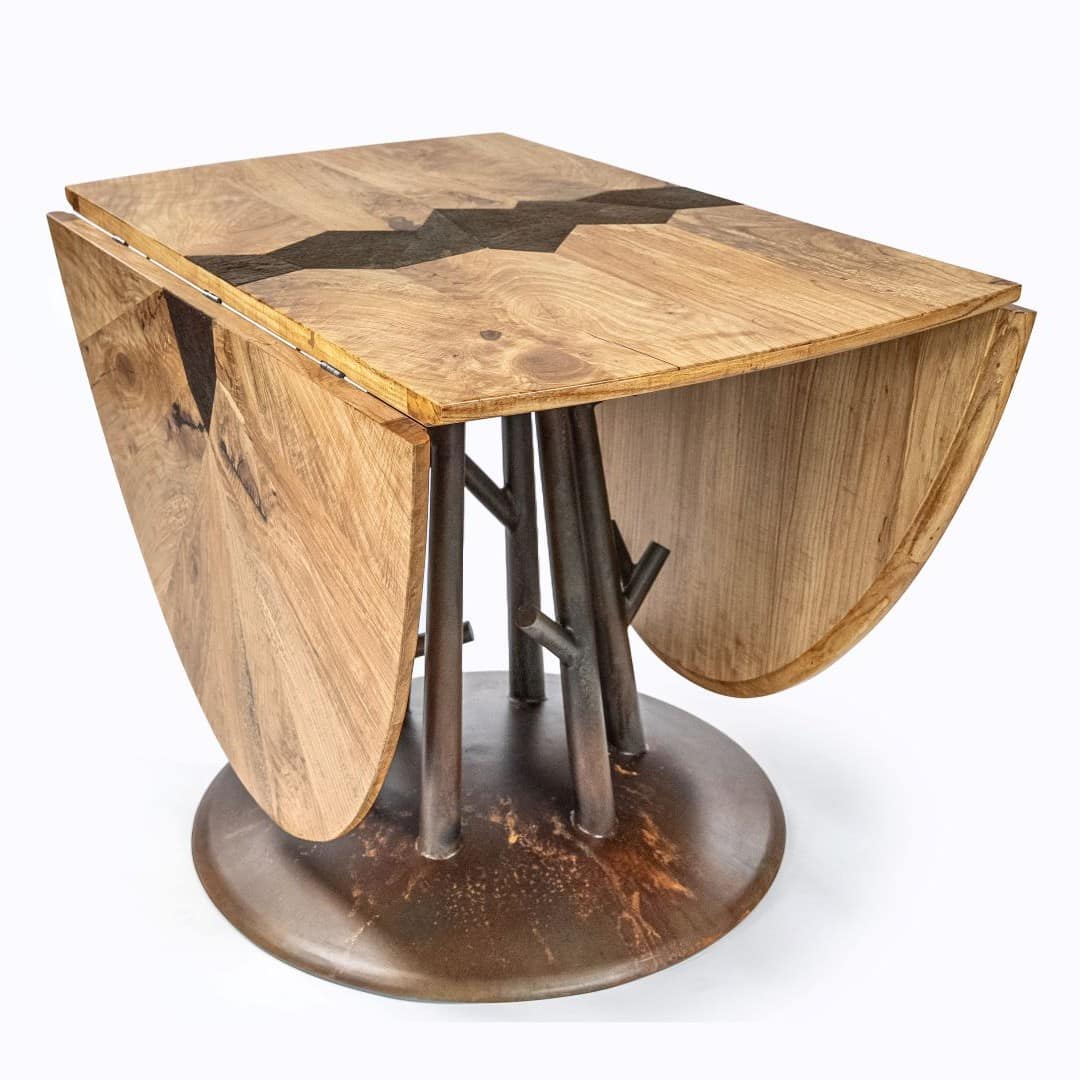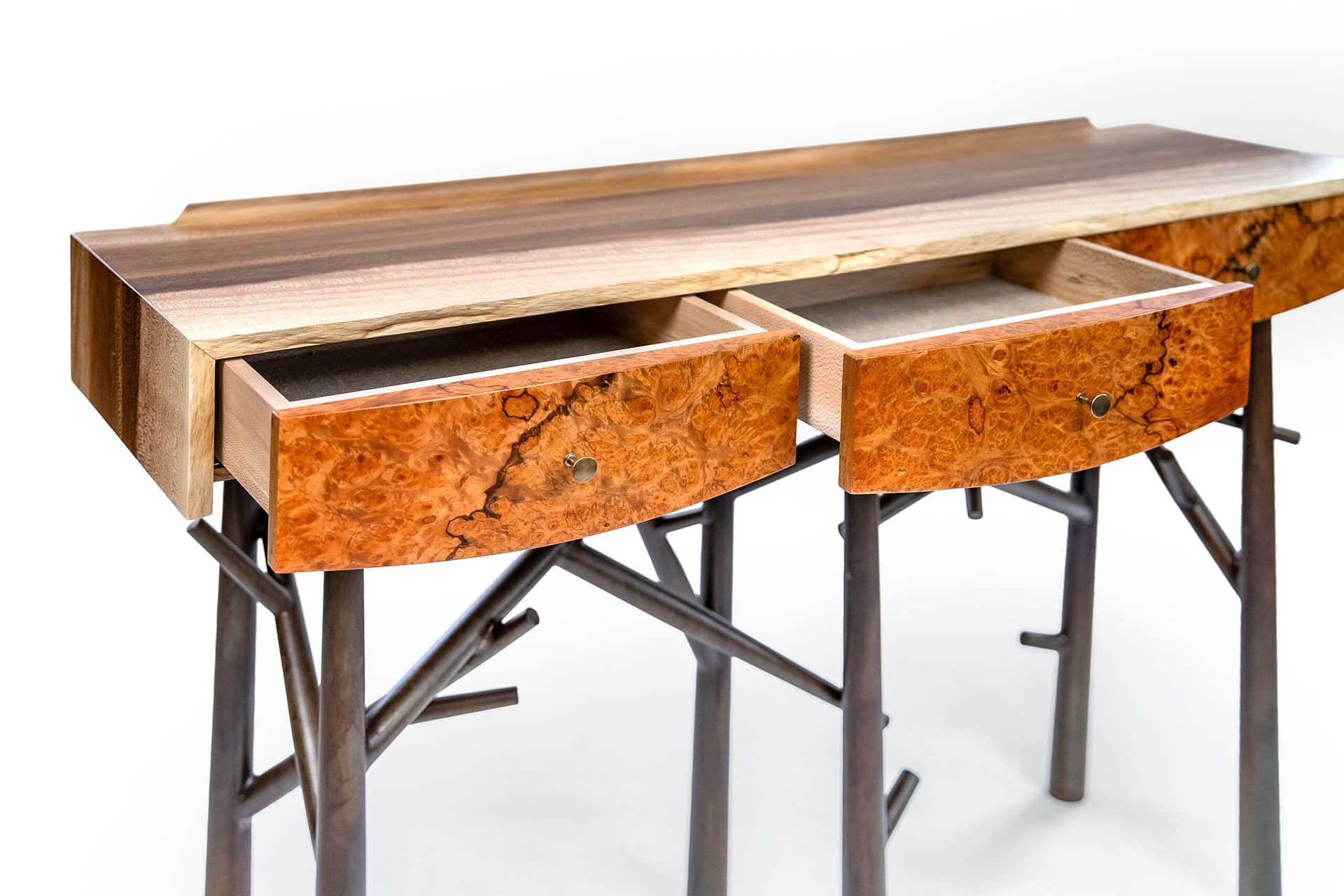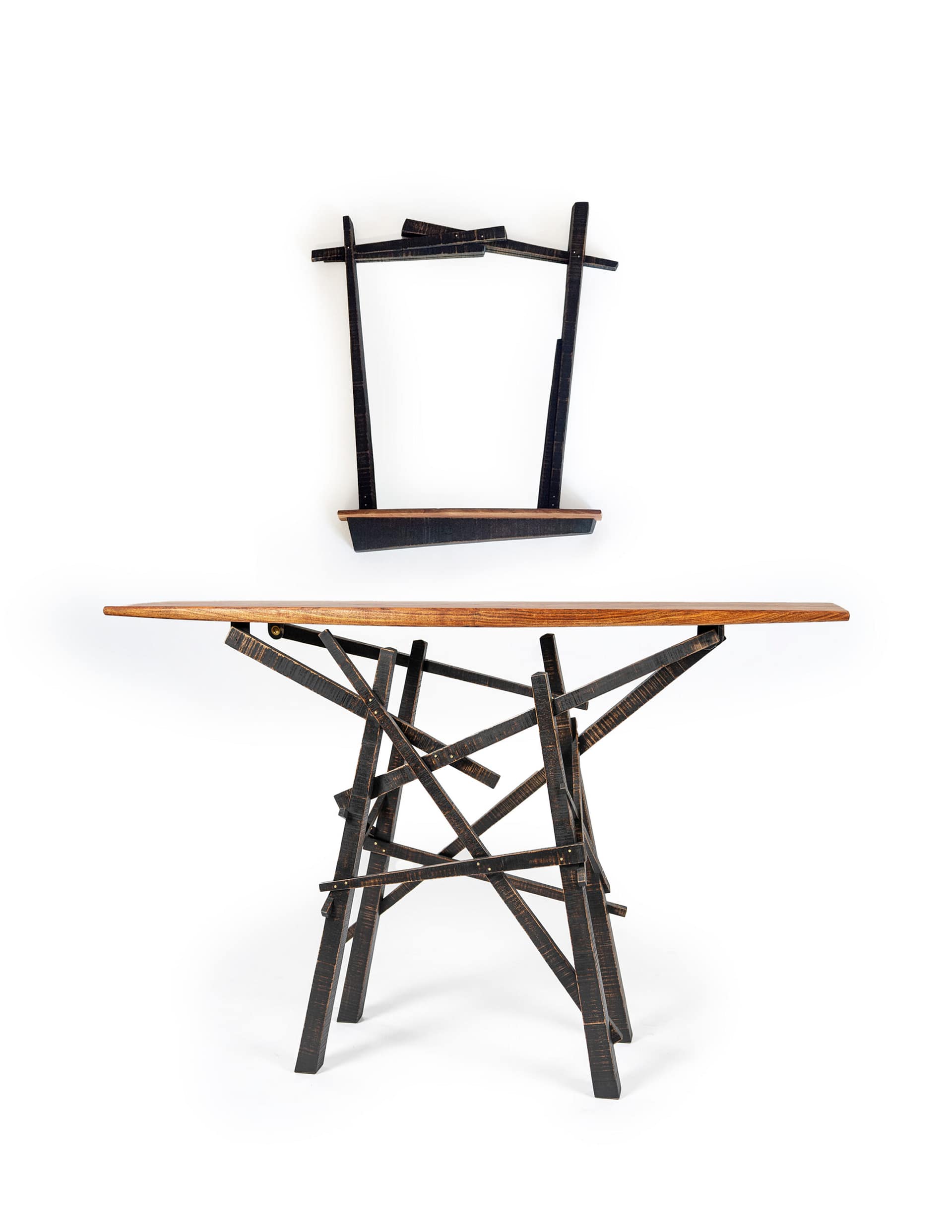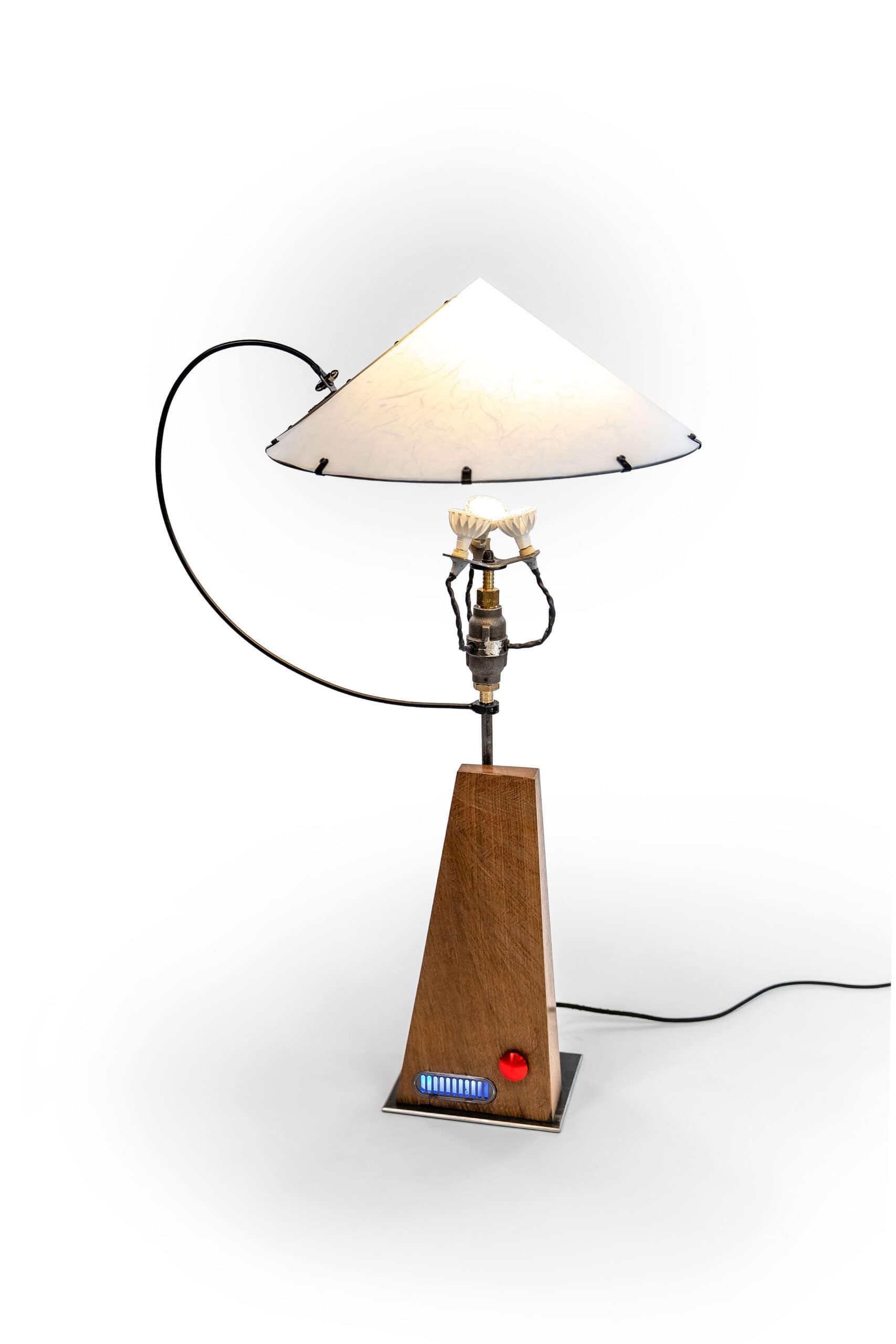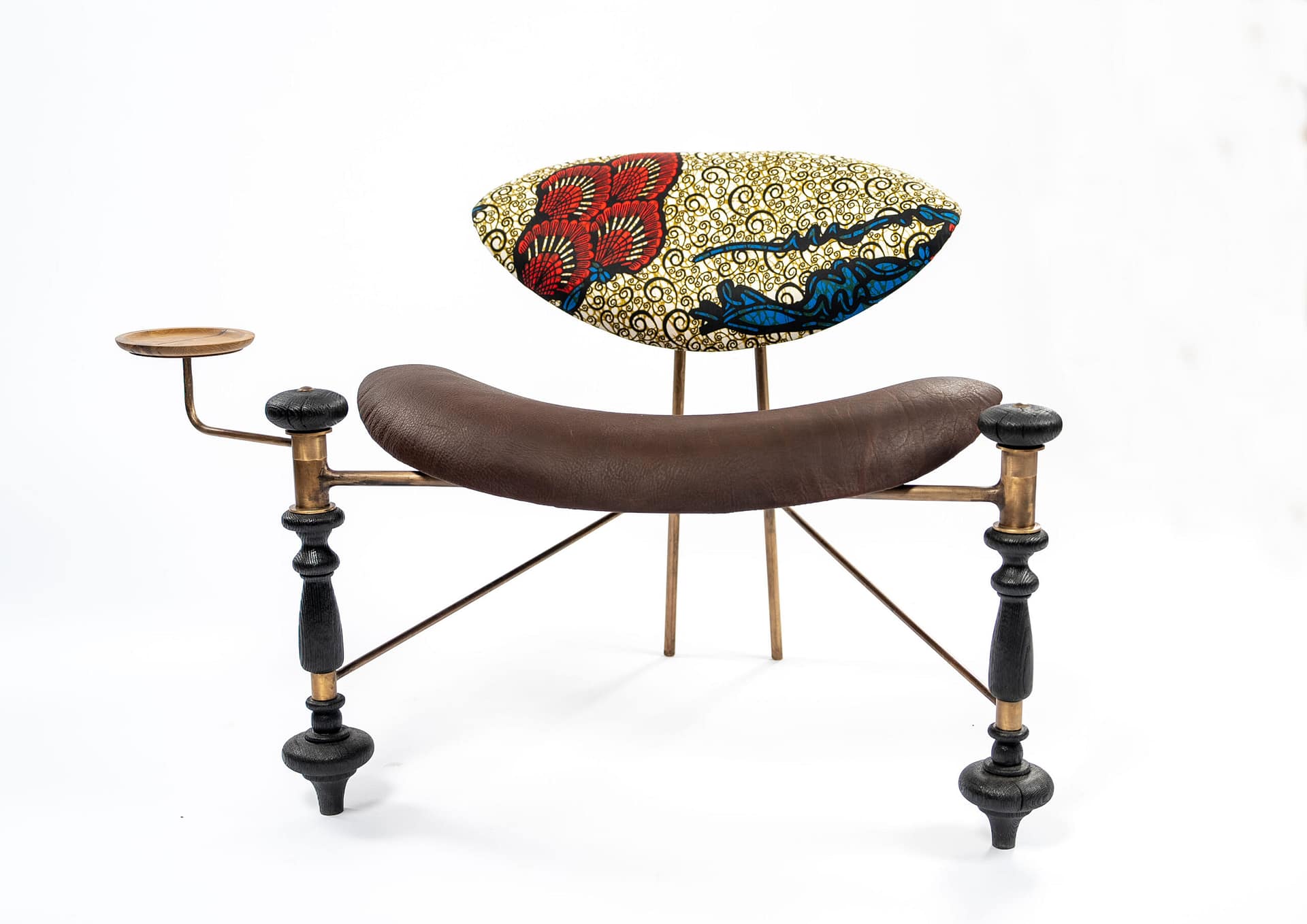


Chris Martin’s work exists between worlds. It is contemporary yet deeply rooted in tradition, meticulously refined yet intentionally marked by the hand that made it. Over more than three decades of work, Martin has drawn inspiration from Czech Cubism, Japanese aesthetics, African and Indian cultures, industrial architecture, and the persistent strength of the natural world. The result is furniture that exists between worlds. A practical object and gorgeous artwork, all in one. And they are extraordinary pieces of work; each collection reflects a particular moment in Martin’s creative journey.
Martin grew up in Keokuk, Iowa, a small river town shaped by factories, machinery, and the Mississippi River. Smoke-belching industrial buildings stood near forested bluffs and open water. To Martin, these environments were far from opposites. They were intertwined. Today, many of those factories are slowly decaying as vegetation pushes through concrete, steel, and brick. Martin remains fascinated by this quiet transformation and by nature’s ability to reclaim the structures built to dominate it.
“There are two threads that run through all my work,” he explains. “A reverence for the natural world and the industrial environment I grew up in.”
That contrast can be seen throughout his furniture. Strong planes and angular silhouettes suggest machinery, architecture, and constructed space. Organic materials introduce warmth, texture, and irregularity. His pieces often feel balanced between control and natural movement, as though the material itself is gradually softening the rigid geometry.
Martin earned his Master of Fine Arts in Furniture Design from the Rhode Island School of Design in 1994. The following year, while living in Colorado’s Roaring Fork Valley, he established Chris Martin Furniture. His practice continued to evolve through decades of designing, making, teaching, and cultural exchange. Travel and collaboration became especially important to his artistic development. From 2008 to 2010, Martin served as a United States Peace Corps volunteer in Ghana, West Africa. In 2016, he received a Fulbright Fellowship to work in Gujarat, India. In both places, he collaborated with traditional artisans and studied the remarkable crafts, materials, and visual languages of local communities.
Rather than borrowing decorative motifs, Martin explored how traditional craft practices could enter into conversation with contemporary furniture. This influence appears in the details, surface treatments, proportions, and construction techniques.
Cultural references are integrated into the larger structure of the work, creating pieces that feel globally informed without losing Martin’s individual artistic voice. And Chris loves experimenting with his work, approaching materials as opportunities for exploration. Wood may be carved, rasped, joined, or shaped into crisp geometric forms. Steel and bronze introduce weight and industrial character. Thin sheets of mica or rice paper offer translucency and an unexpected relationship with light. New technologies may assist in the development of a piece, but the finished work never attempts to conceal its handmade origin.
Martin intentionally leaves what he calls the “fingerprints” of the process behind. Rasp marks, subtle irregularities, and visible evidence of shaping become part of the final composition. These marks are more than decorative texture. They reveal how the object came into being. They provide clues about the tools, decisions, and physical labor involved in its creation.
In a world increasingly filled with anonymous, machine-perfect objects, Martin’s furniture preserves a direct connection between maker, material, and viewer. After teaching Furniture Design and Art and Visual Culture at Iowa State University for 23 years, Martin retired as Professor Emeritus in 2022. Two years later, he completed his dream home and studio in Livermore, Colorado, returning to the state where he first established his furniture practice. Now working full time from the Colorado landscape, Martin has entered a new chapter. Surrounded once again by mountains, forests, and expansive natural forms, he continues to explore the tensions that have shaped his career: industry and nature, technology and handcraft, geometry and imperfection. The work is functional, but it is also deeply personal. It asks us not only to interact with an object, but to notice how it was made, what shaped it, and whose hands brought it into the world.
chrismartinfurniture.com | 970.404.0534