

Article By: Zak Lodhi
For contemporary abstract artist Heather Bentz, art is not simply a finished object. It is a record of experience, a physical trace of how the world is observed, absorbed, and transformed through the act of making.
“My art is a physical record of how I process the world around me,” Bentz explains. “Organizing and layering its frenetic bits to create surfaces that have history and hold the energy that went into their making. The imagery is reminiscent of something familiar. They’re places in which I like to let my mind play and poke around.”
That sense of play is central to Bentz’s creative process. Her work carries a feeling of movement and curiosity, built from layers of color, texture, and experimentation. Rather than rigidly planning every detail, she allows the act of making to guide her discoveries, embracing both risk and surprise along the way.
“I have no idea if this is going to work,” she says with a laugh. “But I want to go and see. I want to try. I love the risk.”
This openness to experimentation is part of what gives Bentz’s work its vitality. Each piece feels alive with the energy of the process behind it, revealing a balance between spontaneity and thoughtful composition. Her surfaces often carry traces of previous decisions, marks, textures, and layered forms that create depth and visual rhythm. Much of that inspiration comes directly from the environment around her. For those unfamiliar with the American Southwest, the desert landscape can be startling in its intensity. For Bentz, moving to the region was both a sensory awakening and a profound creative influence.
“This is the first time I’ve lived in the desert,” she says. “I’ve lived in a lot of different places, but the desert is extreme and surprising in many ways.”
At first, it was the colors that caught her attention, the bold palette of the desert sky, the shifting light across the landscape, and the vibrant tones hidden within seemingly sparse terrain. But soon she found herself equally captivated by the shapes and forms of the environment. The strange silhouettes of cacti, the twisting lines of desert plants, and the unexpected geometry of the landscape began to appear in her work. The experience reminded her of the imaginative worlds of a beloved childhood author.
“I feel like living here in the desert is like being in a Dr. Seuss book,” Bentz says. “There are so many strange-shaped plants that it’s like, ‘This is awesome.'”
That sense of wonder carries through her work, where natural forms often evolve into playful and imaginative interpretations. Rather than replicating nature exactly, Bentz blends observation with invention, creating compositions that feel both recognizable and dreamlike.
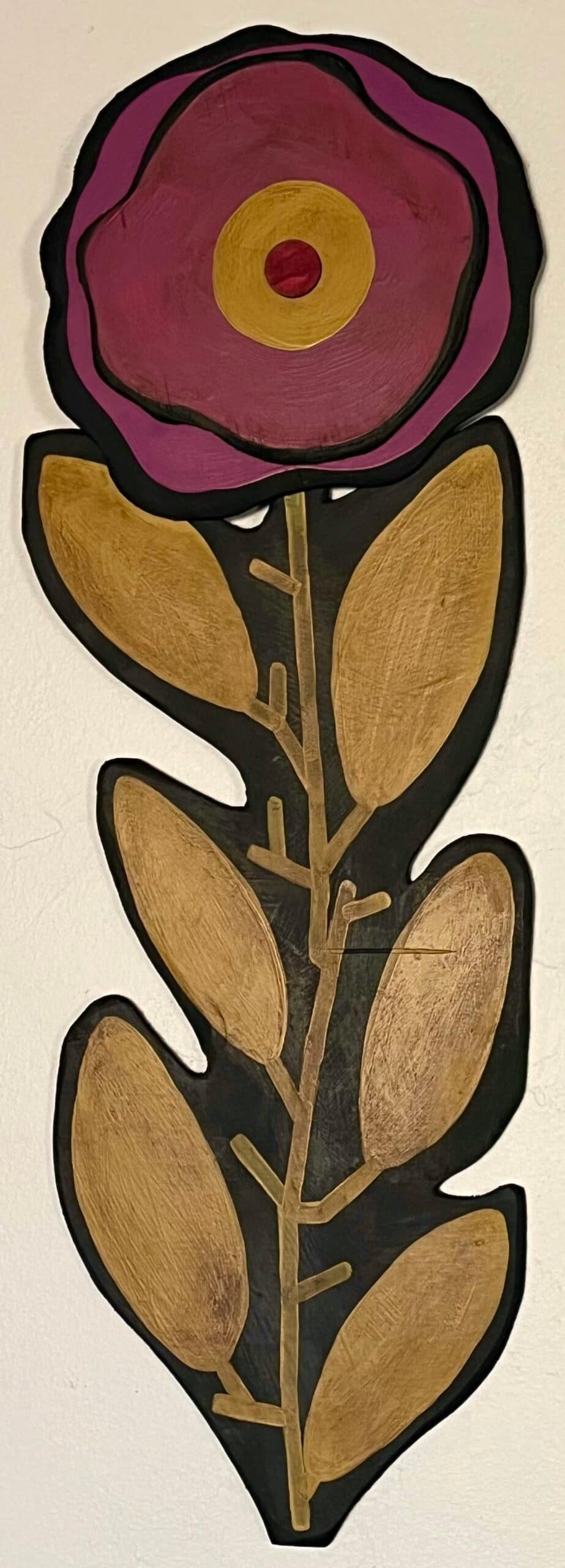
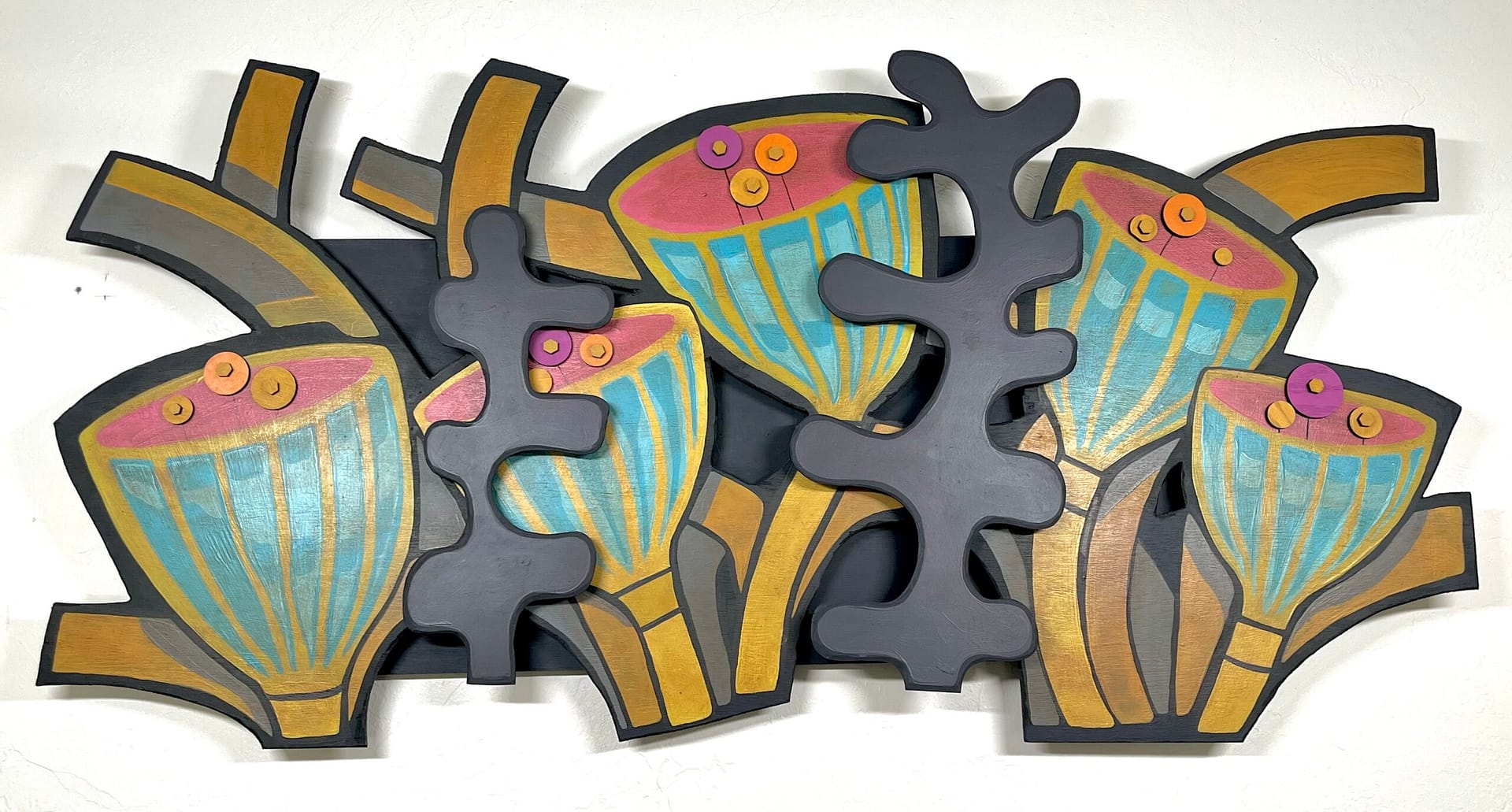
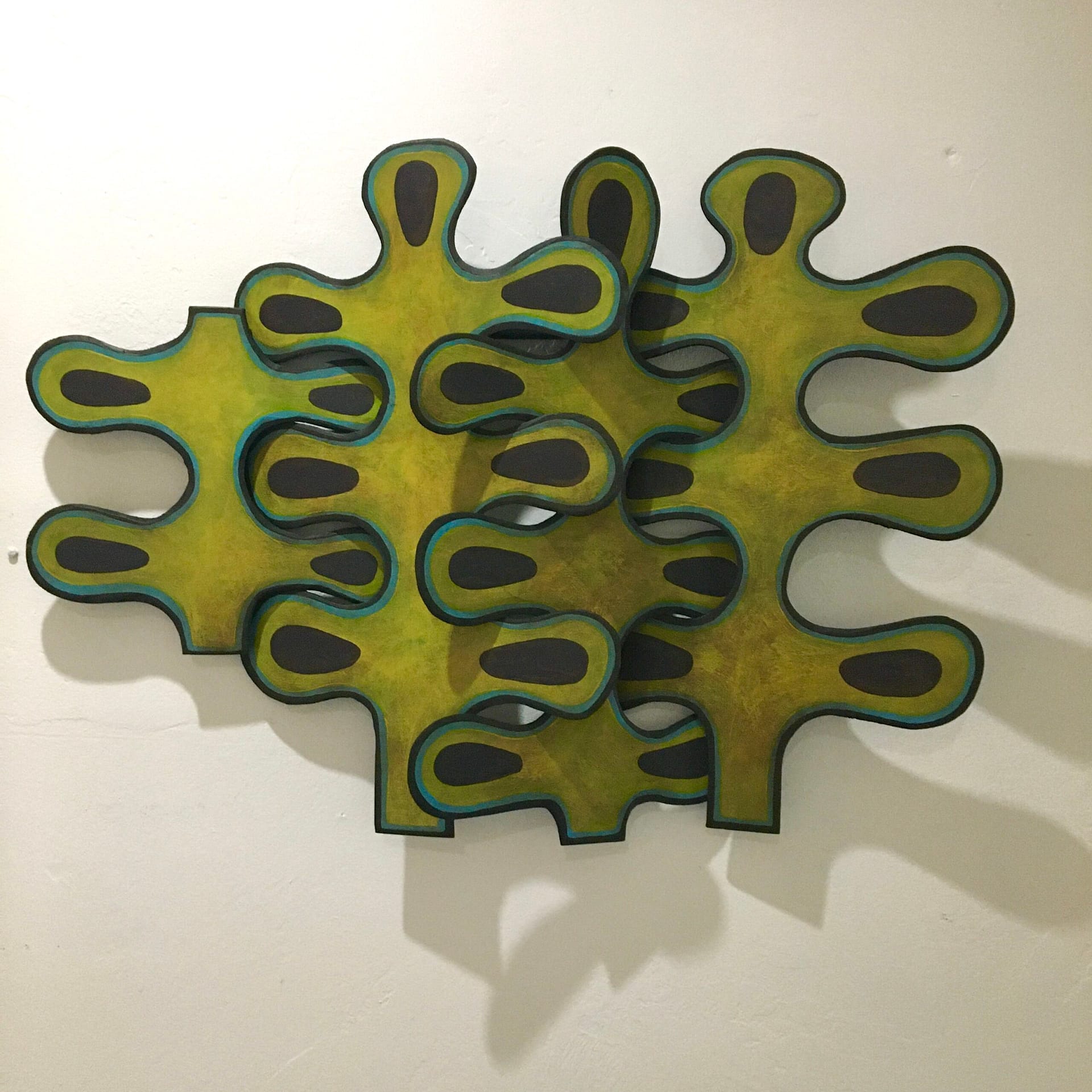
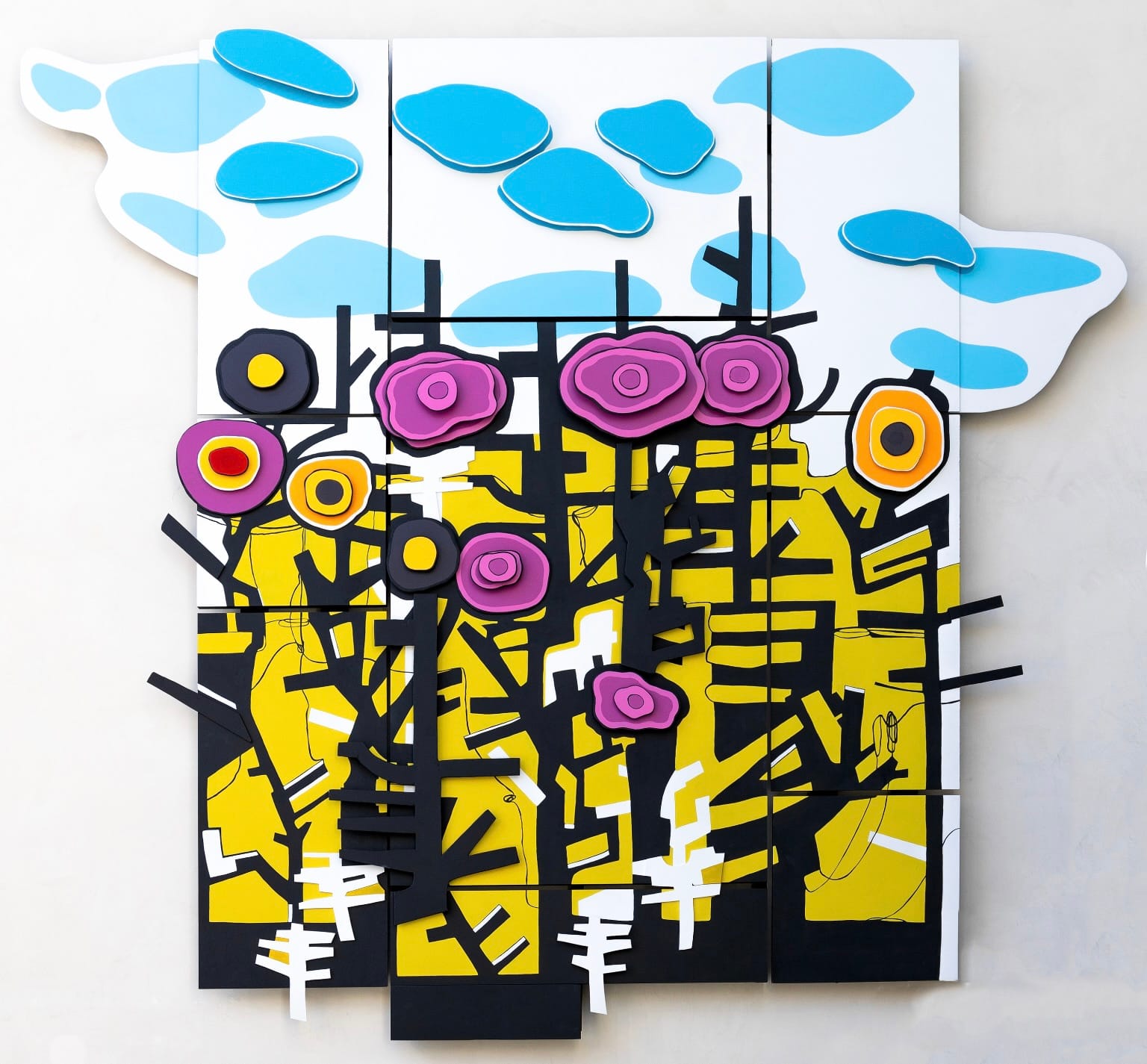
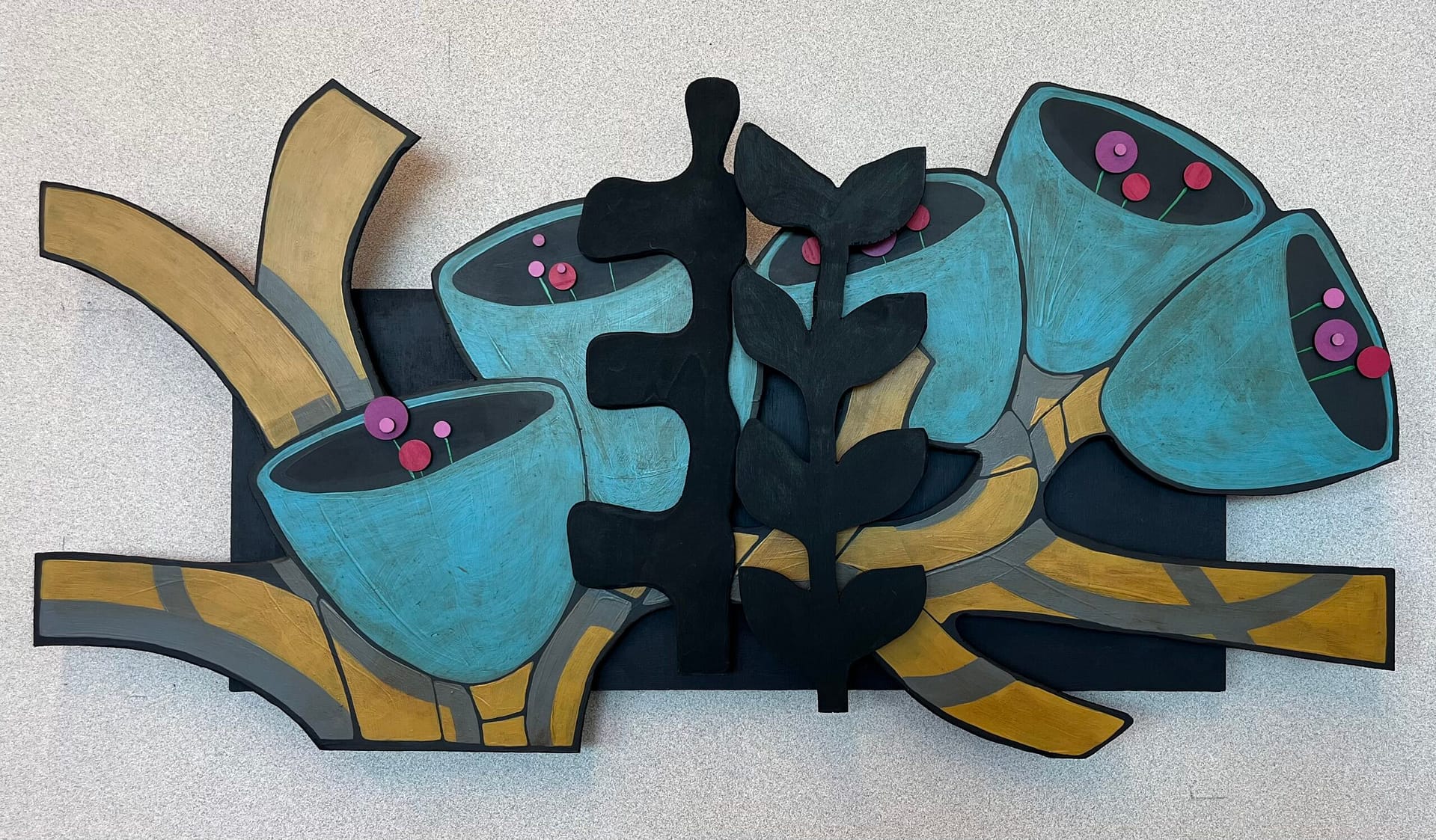
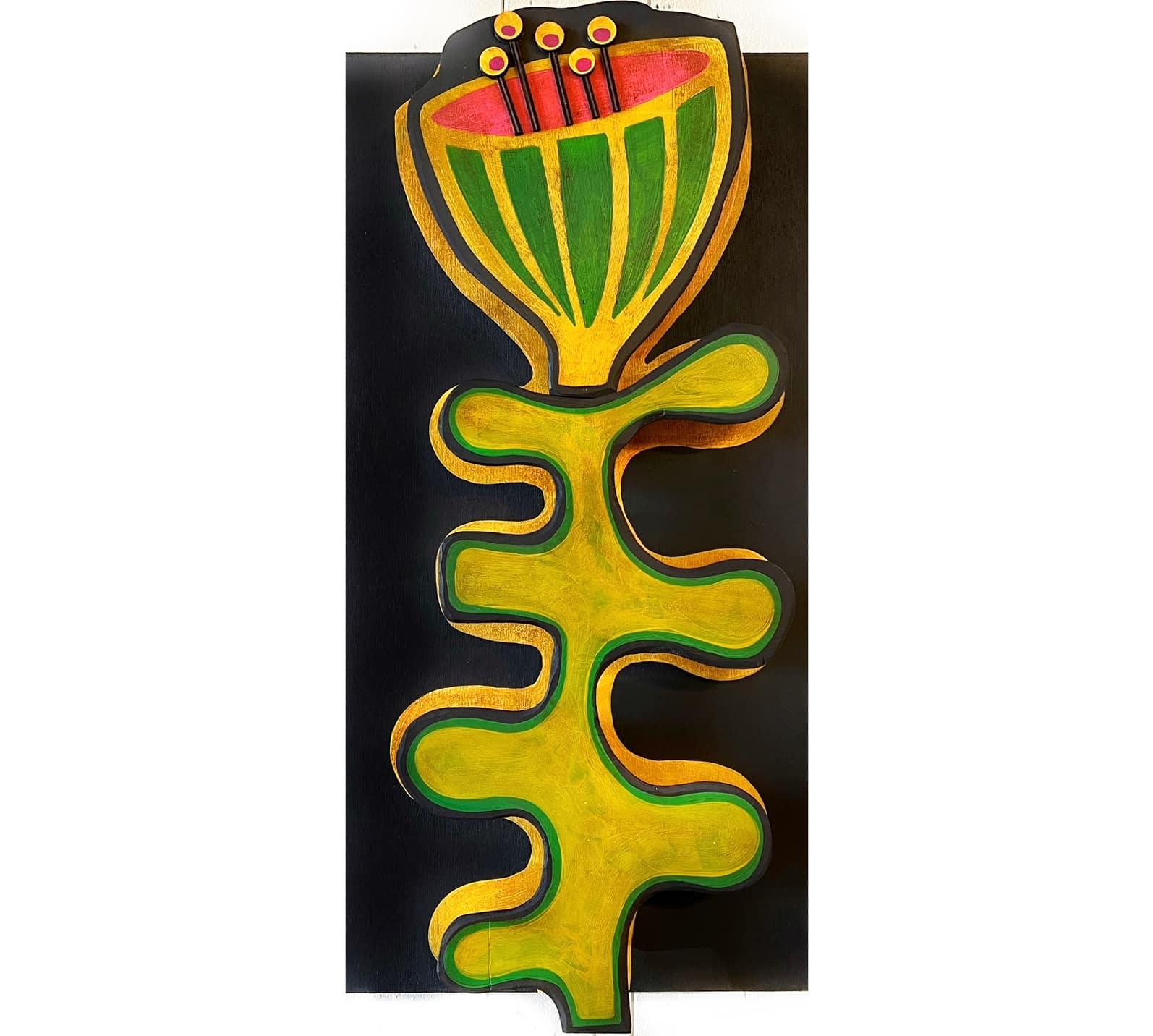
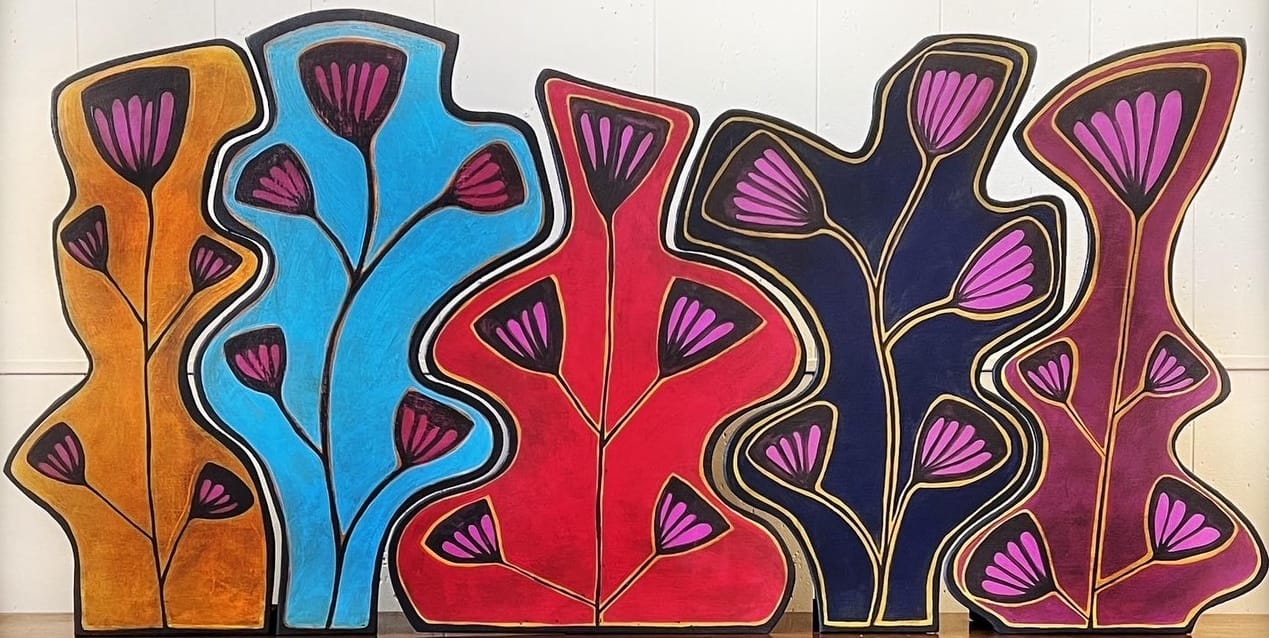
Her three-dimensional work explores this idea even further. In her series Joy in the Making, Bentz constructs colorful sculptural forms from plywood and paint, creating whimsical interpretations of flowers, plants, and clouds. Inspired by the natural world, these pieces transform familiar shapes into vibrant, layered objects that invite viewers to experience them from multiple angles. The title of the series reflects both the emotional impact of the work and the artist’s personal connection to the process itself.
“I am happiest when I’m making something,” Bentz says. “Working with my hands, challenging my abilities, and problem-solving.”
Using basic materials such as plywood and latex paint, Bentz builds compositions that celebrate color, form, and tactile experimentation. The materials remain simple, but the results feel energetic and full of life. In many ways, the pieces function as small celebrations of curiosity itself.
For Bentz, creativity is not about arriving at a single perfect outcome. It is about remaining open to exploration, allowing imagination to interact with the physical world, and discovering meaning through the act of making. Through both her layered paintings and playful sculptural works, Bentz invites viewers into that same spirit of discovery, encouraging them to look closely, explore freely, and find joy in the process.