Article By: Zak Lodhi
Before the sparks, there is a line. A single mark on paper. A curve that suggests movement. A gesture that hints at something rising, stretching, reaching. For sculptor Pamela Ambrosio, every monumental steel art piece begins quietly, in a notebook filled with drawings. From there, the process becomes physical. Hands-on. Elemental. Steel is cut, welded, heated, and refined. Sparks fly in brief constellations across the studio floor.
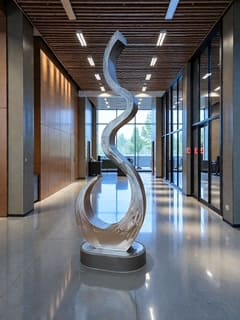
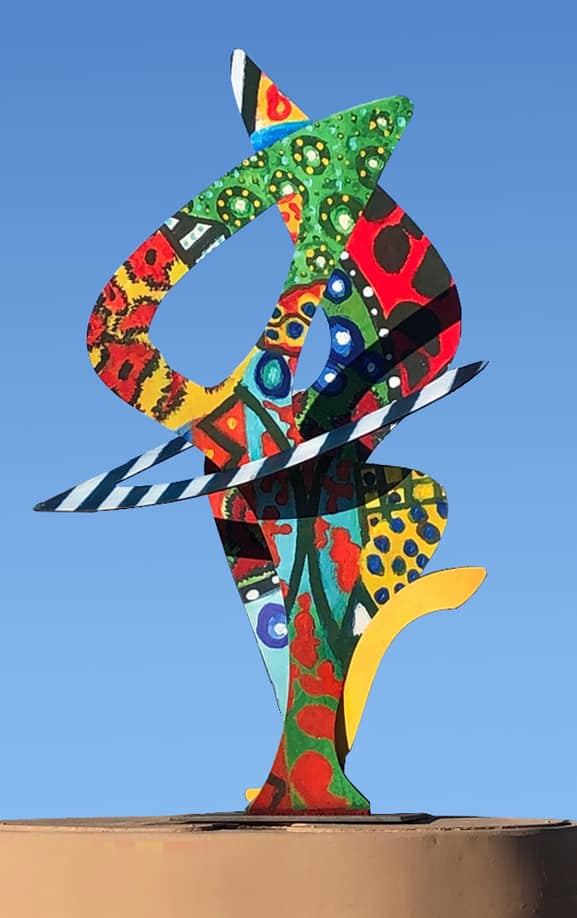
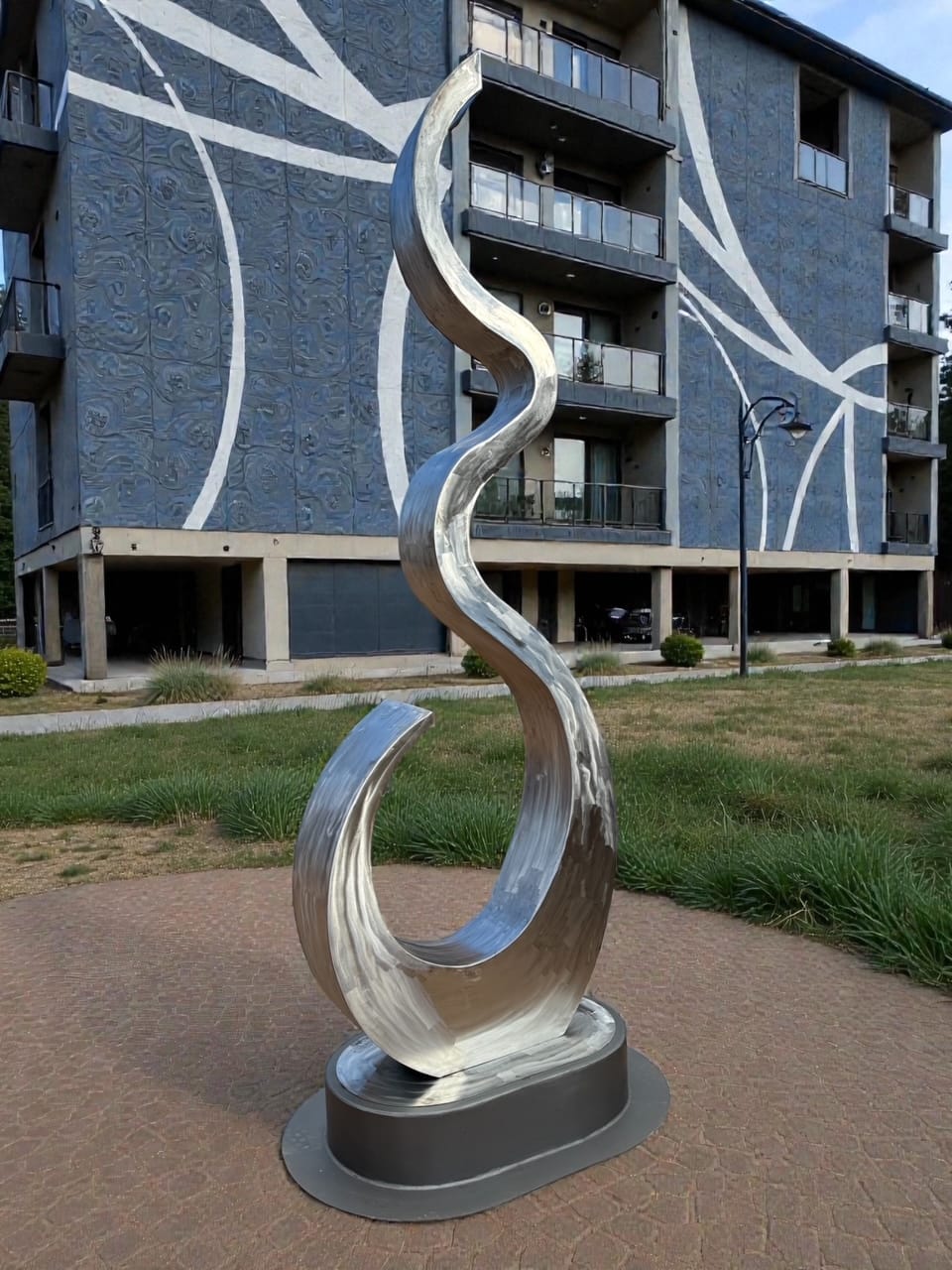
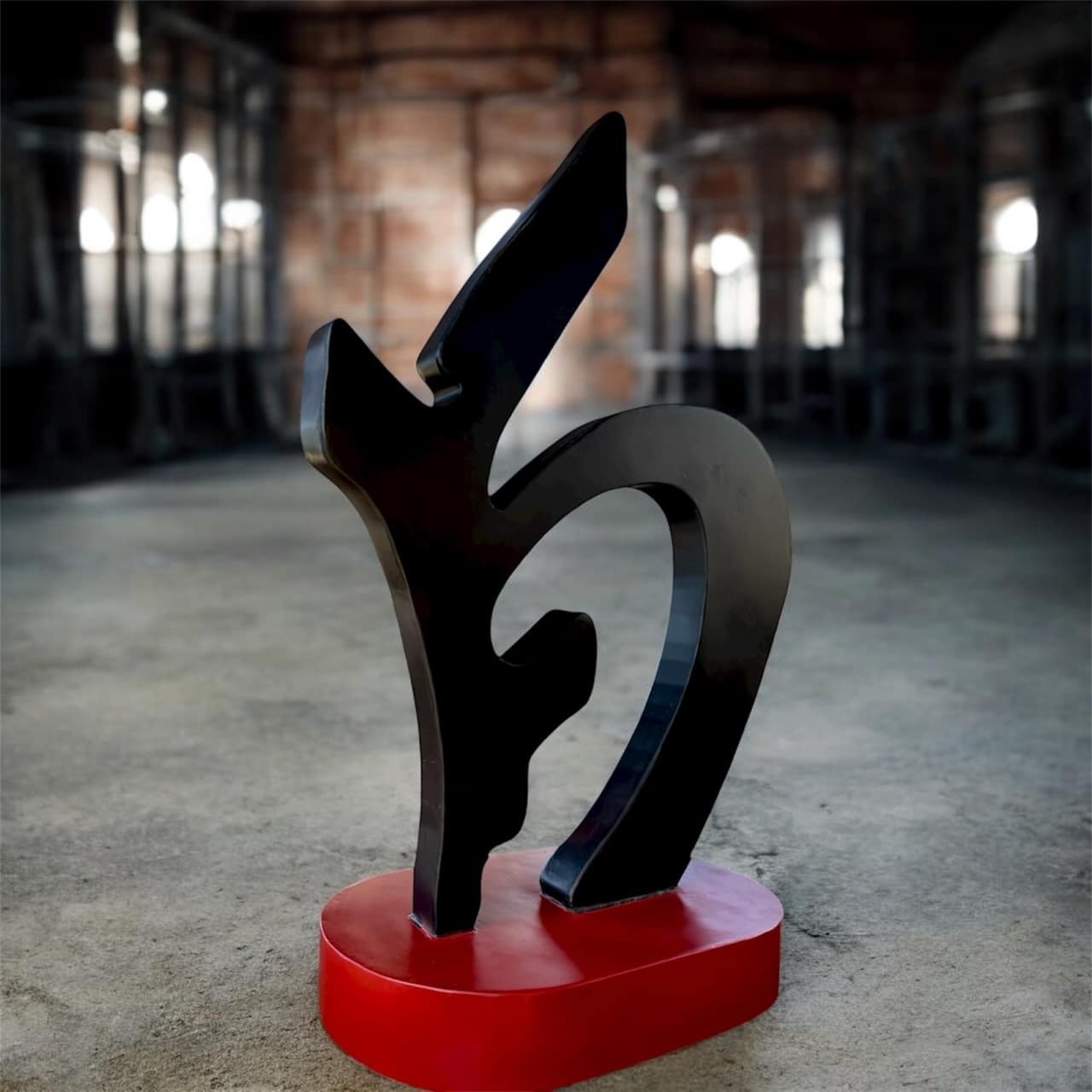
What emerges is a work of art. A sculpture that feels both grounded and alive. Ambrosio’s work occupies a space between industrial force and painterly grace. Trained in the arts, she was drawn to metal not only for its strength, but for its surprising pliability. Steel, in her hands, becomes a truly unique material, capable of bending into fluid arcs. Planes intersect with elegance. Shadows become part of the composition as much as the metal itself.
There is a sensitivity in her work that feels almost lyrical. Whether freestanding in a sculpture garden, mounted on a wall, or integrated into public space, her pieces invite close attention. Walk around them, and they shift. Light might catch an edge differently than it did an hour ago. And the negative space within the work becomes as important as the mass itself.
Ambrosio’s background is not solely artistic. She holds a business degree from the University of Arizona, where she also competed as a swimmer at the collegiate level. That discipline, repetition, endurance, and focus required in competitive athletics inform her sculptural practice every day. There is rhythm in her work. Balance. A sense of push and counter-push that you can really feel. Travel has also shaped her visual language. Time spent competing internationally with the U.S. National Team, along with extensive personal travel, exposed her to diverse landscapes, architecture, and cultural forms.
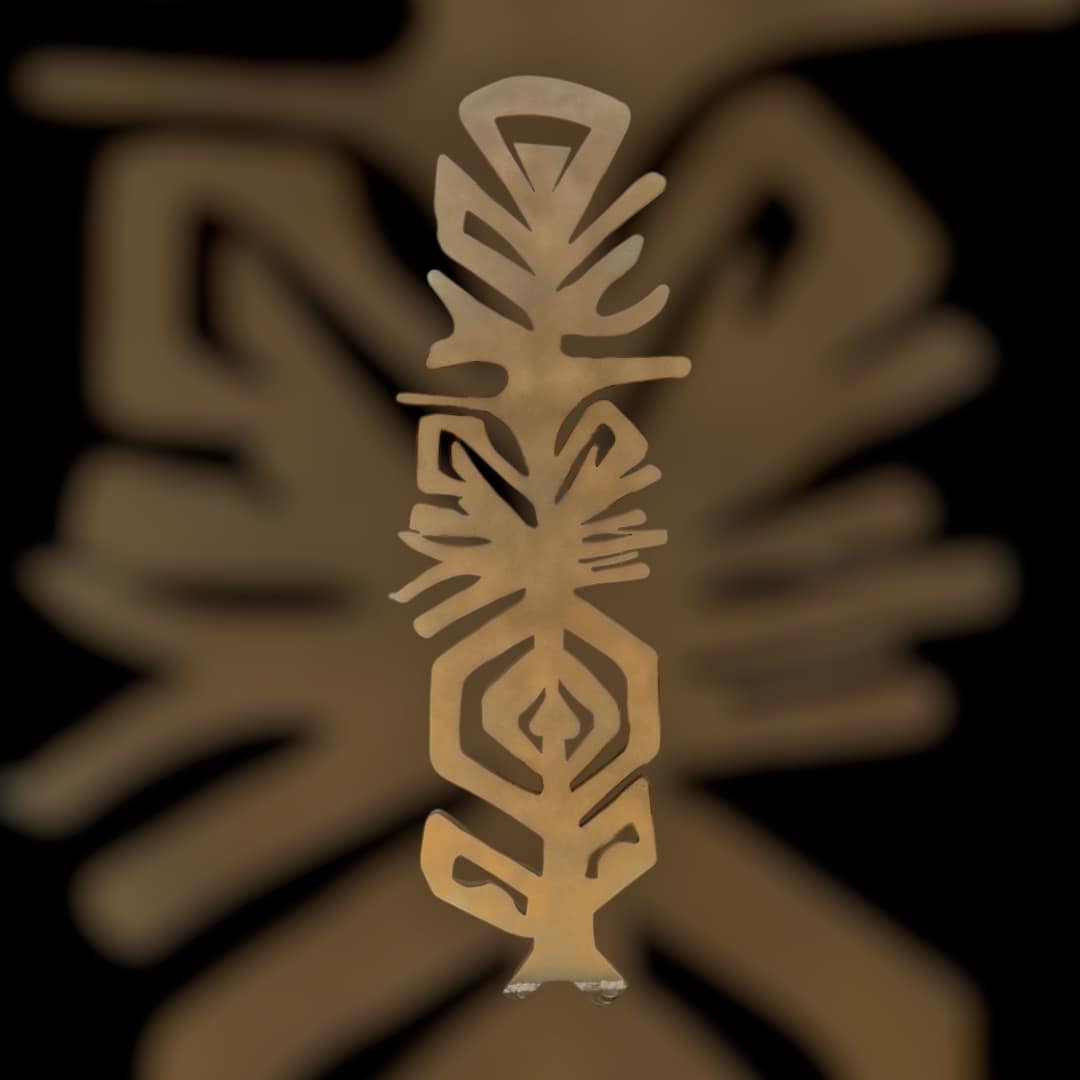
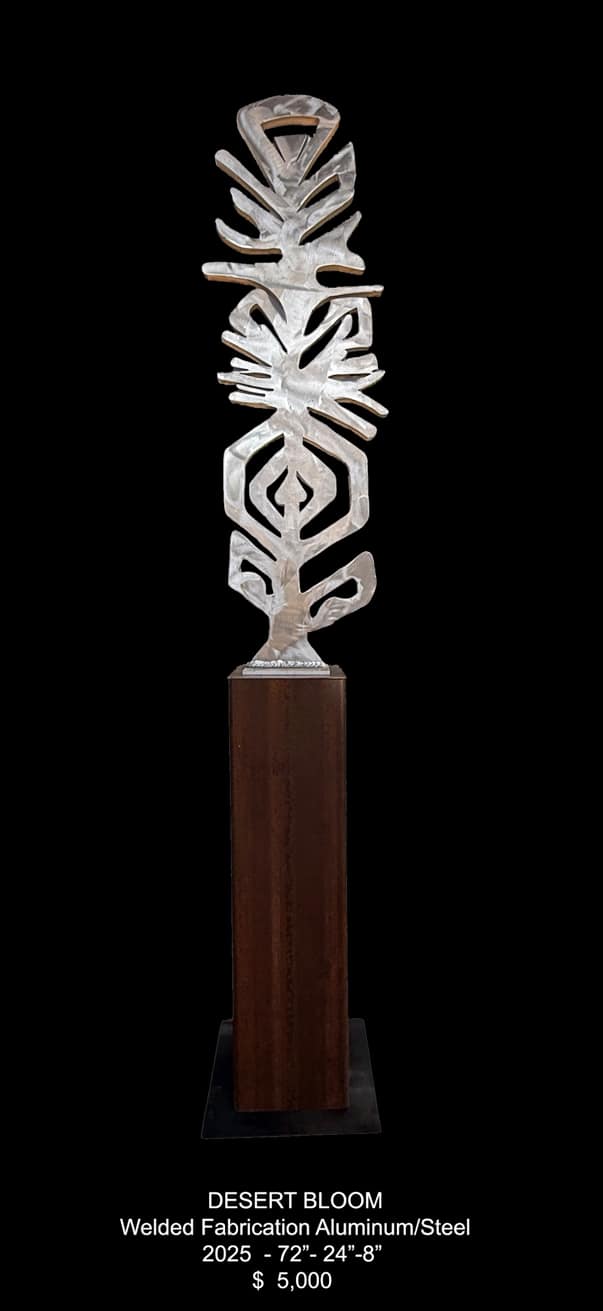
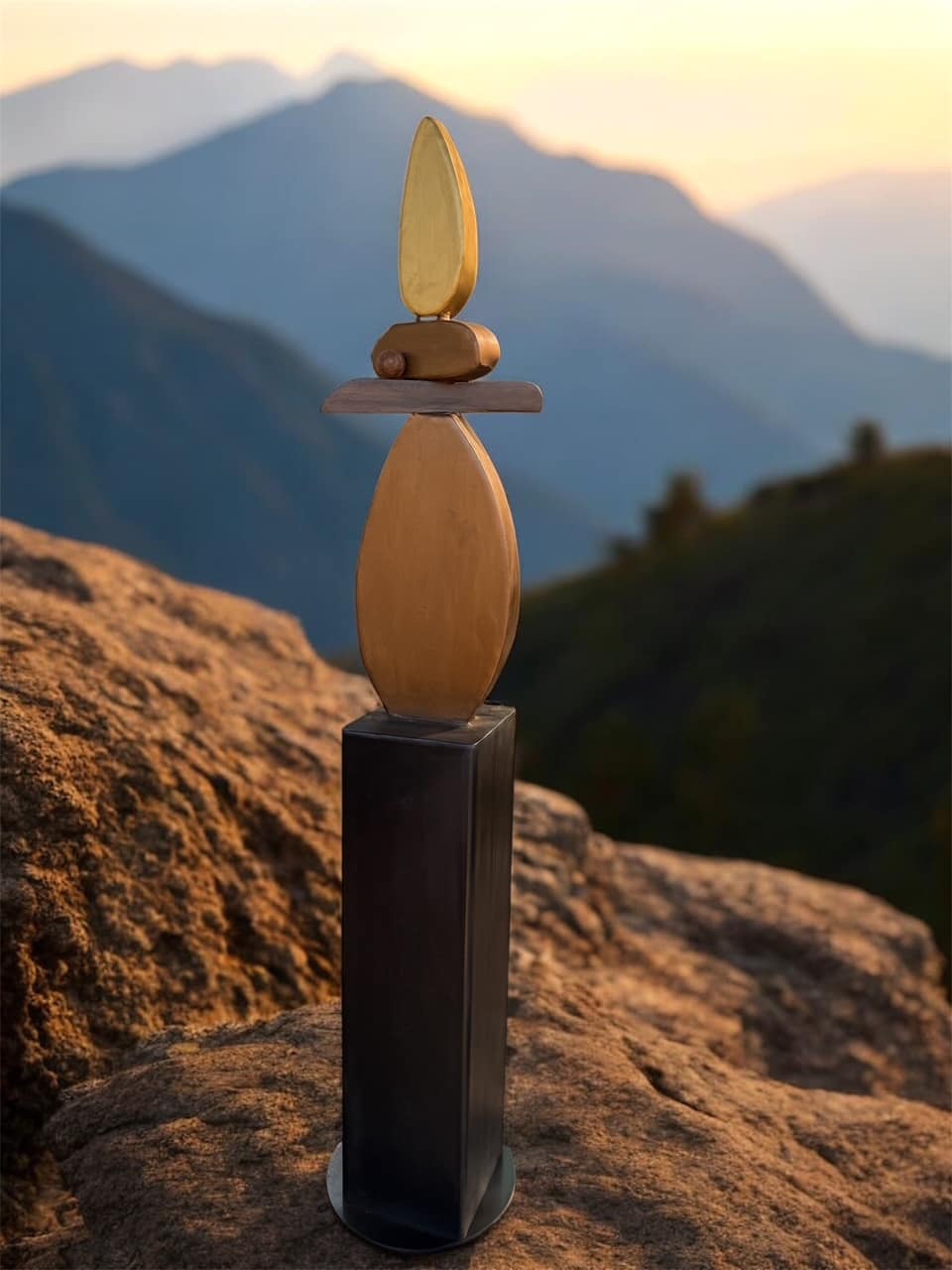
These experiences broadened her perspective and deepened her sensitivity to how form interacts with the environment. Her newest series, however, takes a different route, drawing inspiration from nature. Branches reaching skyward. Organic growth patterns.
The quiet insistence of wind through grass. But it’s more than just mindlessly copying the structures of plants. Her works begin a conversation with the natural world; they don’t imitate it. And in this dialogue with nature, you begin to see the motion of her work. Even at rest, they imply ascent, expansion, or transformation. Steel, traditionally associated with rigidity, becomes expressive and almost weightless in her compositions. Color explodes from her pieces. And the result is plain to see: every piece sticks with you.
It’s easy to see why, then, that her ability to balance large-scale presence with fine-art nuance has earned her a devoted following. As a top seller at Loveland, Colorado’s prestigious Sculpture in the Park, one of the largest sculpture exhibitions in the nation, Ambrosio has built relationships with collectors who return year after year. Inhabiting both intimate and civic spaces, you can find her work all over. Look for her installations at the Newport Beach Civic Center, the Tucson Jewish Community Center Sculpture Garden, Plaza Colonial in Tucson, the Tucson Botanical Gardens, and in downtown Moab, Utah. Beyond public commissions, her sculptures reside in private collections and galleries across the United States and Europe. Yet for Ambrosio, the most compelling aspect of her practice remains collaboration.
Custom commissions allow her to respond directly to the space, crafting a piece that speaks to the surroundings in which it will be installed. Each commission becomes a dialogue among artist, material, and environment, from sketch to steel!
Stand before a Pamela Ambrosio sculpture, and you feel it immediately, far more than any picture lets you. That strength without heaviness, movement without chaos, structure without rigidity. The work occupies space with confidence, yet leaves room to breathe. It reminds us that even the hardest materials can carry grace. And that steel, when shaped with intention, can feel almost alive.